Master of Social Work (M.S.W.)
Graduate ready to meet initial social work licensure requirements. Fellowships and scholarships available.
View all Counseling and Social Sciences Programs
Earn your M.S.W. Advance your career.
Merrimack’s CSWE-accredited, two-year graduate degree in social work is designed to prepare you to be an agent of positive change and transform the society in which you live.
Quick facts:

Accreditation: CSWE, NECHE

Online and on-campus course options

60 credits (36 with advanced standing)

Complete in two years full time; part-time study available

Scholarships and Fellowships available

Financial aid eligible

No GRE or GMAT required
Learn more about Merrimack’s Master of Social Work (M.S.W.)
Access a program brochure, connect with enrollment and get a head start on your application.
Why Choose the M.S.W. Program at Merrimack
In addition to being the only M.S.W. degree program in the Merrimack Valley, our program stands out for its:
Convenient Flexibility
Our M.S.W. program is a two-year, 60-credit advanced generalist program with evening classes and many elective options.
We also offer a three- to four-semester, 36-credit advanced standing program for students who have earned a Bachelor of Social Work degree from a Council on Social Work Education-accredited institution.
Available Fellowships and Scholarships
Benefit from a graduate fellowship covering 100 percent of tuition for the first year of the program (up to 36 credits), which includes a nine-month, unpaid placement, requiring a commitment of 25 hours of work per week, or scholarships based on academic merit/financial need and for Merrimack alumni.
Real-World Field Experience
Our program creates and provides students with transformative learning experiences in and out of the classroom that positively impact children, families and the greater society.
You will engage in a minimum 900 hours of hands-on practical experience in a local school, community agency, nonprofit, health or mental health center, or another relevant social service-type agency or institution.
Practical, Relevant Skills
Merrimack’s M.S.W. program focuses on access, equity, social and economic justice, as well as ethical and reflective practices.
Upon graduation, you’ll be well equipped to respond to the need for services that promote social, economic and political justice for all groups, especially those confronting discrimination and oppression.
Overview of Merrimack’s Master of Social Work
Our M.S.W. degree program is an advanced generalist program with an emphasis on interdisciplinary collaboration.
You will integrate and apply social work knowledge, values, skills and cognitive and affective processes to practice in a culturally responsive, purposeful, intentional and professional manner to promote human and community well-being.
You will have the option to take electives that will lead you to gain knowledge within a specific practice area. Depending on your focus, you may be assigned a field educational experience within the corresponding practice area.
You can select from a variety of interests, including:
- Clinical practice with individuals, families, groups and organizations
- Substance use disorders and behavioral addictions practice
- Macro social work practice
- Community engagement
- School social work
- Spirituality
- Criminology and criminal justice
Coursework, Field Experience and Exam Prep
Through Merrimack’s Master of Social Work, you will learn both in the classroom and in real-world settings. CSWE requires M.S.W. students to spend at least 900 hours in the field.
Merrimack’s M.S.W. program staff will assist students in securing a field educational experience that will provide outstanding, real-world, social justice-based work.
In addition, our social work program provides you with full preparation for taking the initial social work license exam. You will learn how to:
- Conduct clinical assessments and plan interventions using the latest treatment modalities
- Work with diverse clients of all racial, ethnic and cultural backgrounds
- Help children and families navigate schools and other social institutions
Faculty Spotlight
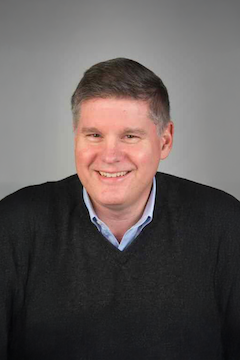
James Howland, Ed.D., M.S.W.
Dr. James Howland is a Licensed Independent Clinical Social Worker with over 30 years of clinical practice experience. His research centers around the engagement of boys and men exploring their understanding of social and emotional development and identities, paying particular attention to the influences of family, peers, gender and culture. His expertise also includes the evaluation and treatment of mental health and substance use disorders; sport psychology; and the engagement, assessment and evaluation treatment of mental health and substance use disorders. Dr. Howland earned both his Ed.D. in Counseling Psychology and M.S.W. from Boston University.
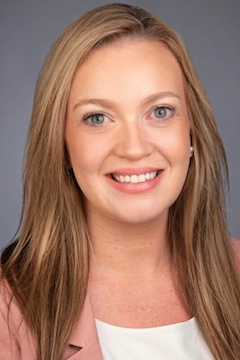
Katherine Willard, M.S.W., LICSW
Katherine Willard is a Licensed Independent Clinical Social Worker with expansive knowledge in supporting children, adolescents and families. Most recently, Katie served as the assistant director of school counseling to a local urban school district, where she was tasked with overseeing all social-emotional learning initiatives for the district, providing supervision to all mental health clinicians, guidance counselors and social workers, and leading all mental wellness initiatives for the district. Most notably, she was able to connect the district with the Early College Program. Katie also has experience as a school adjustment counselor and an outpatient counselor, day treatment facilities and residential programs. She holds an M.S.W. with Specialization in Trauma and Interpersonal Violence from Simmons College and an Ed.S. from Bridgewater State University.
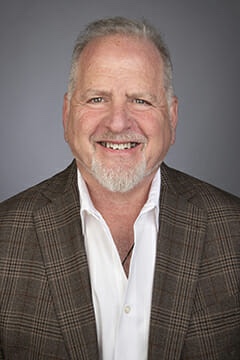
Jonathan Kessler, M.S.W., LICSW
Jonathan P. Kessler is a clinical social worker with over 30 years of experience. He has provided clinical services in a variety of settings, including criminal justice work, in- and outpatient treatment, addictions and trauma. He is the former clinical director of Camp Amesbury, a residential facility for incarcerated adolescent women, and has been the lead social worker for North Shore Educational Consortium’s Transitions Program, working with young adults on the autism spectrum. He has advanced clinical skill training in hypnosis, trauma, motivational interviewing, as well as individual, group and family therapy. He holds an M.S.W. from Simmons College School of Social Work.
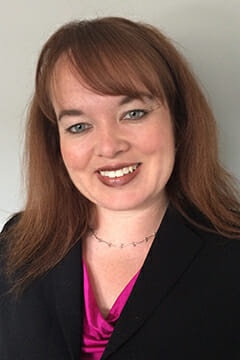
Sara Lafkas, Ed.D., M.S.W.
Dr. Sara Lafkas began her career working as an elementary school teacher in South Los Angeles. After receiving her M.S.W., she was a social worker in Child Protective Services in Northern California. Some of her additional professional experiences include working as a psychotherapist in private practice and at college counseling and community mental health service centers. Dr. Lafkas has also previously served as a social work faculty member and as an instructor for graduate-level counseling courses. Dr. Lafkas’ dissertation focused on Latter-Saint (Mormon) Women who experienced parental divorce. She has also presented and written on many other topics, including self-compassion practice. Some of her recent research has focused on women’s perceptions of self-compassion. Dr. Lafkas earned her Ed.D. in Human Development and Psychology from Harvard University Graduate School of Education and her M.S.W. from the University of Washington.
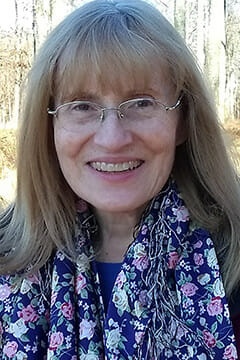
Virginia Durnford, Ed.D., M.S.W., M.A.
Dr. Virginia Durnford is an expert in trauma-informed care and the provision of therapeutic services for children and adults with special needs, particularly within trauma-sensitive school environments. Her research focuses on the treatment of trauma, including PTSD, and how it affects learning, with a special interest in developing strategies to support educational teams working with students struggling with Trauma- and Stressor-Related Disorders. Dr. Durnford holds an Ed.D. in Teacher Education and School Improvement from the University of Massachusetts, Amherst, an M.S.W. in Social Work from Boston University, and an M.A. in Special Education from the University of Connecticut. Her professional experience includes counseling in high-needs schools, providing therapeutic services in both school settings and private practice, and using resiliency training to help youth and young adults manage stress and anxiety.
Where Merrimack’s Master of Social Work Graduates Work
Beth Israel Lahey Behavioral Health Services
Clinical Social Worker
The Center For Hope and Healing, Inc.
Counselor and Program Advocate
NFI Massachusetts, Inc.
MST Clinician
Department of Mental Health
Transitional Age Youth Case Manager
What Our M.S.W. Students and Alumni Say
Tune Into the Grad Chat Podcast
Tune in to this episode of Grad Chat, where we are joined by Jordan Raffali, a graduate of Merrimack’s Master of Social Work. Jordan opens up about his experience in the program, highlighting the convenient flexibility that allowed him to balance his studies with other commitments, and the exceptional faculty who supported and challenged him along the way. Hear how the program shaped his academic path and prepared him for a meaningful career in social work!
Tune Into PodcastTuition and Financial Aid
Master of Social Work
$750
per credit**
60
credits
$45K
tuition
Master of Social Work – Advanced Standing
$750
per credit**
36
credits
$27K
tuition
**Tuition is based on the 2025-2026 academic year.
Tuition and fees are subject to change annually.
Additional program fees may apply.
Financial Aid
As a graduate student, you may qualify for federal support in the form of loans. We strongly encourage all eligible* graduate students to apply for federal financial aid, even if they don’t demonstrate an exceptional financial need.
All graduate students also have the option of obtaining private loans and/or enrolling in an institutional payment plan.
Complete the Free Application for Federal Student Aid (FAFSA).
Merrimack College’s FAFSA school code is 002120.
*Certificate programs do not qualify for federal financial aid.
M.S.W. Graduate Fellowships
Graduate fellowships in Merrimack’s Master of Social Work program provide hands-on professional experience while significantly reducing tuition. Fellows benefit from real-world work opportunities and professional networking.
The Master of Social Work fellowship program offers graduate students the opportunity to receive a Presidential Fellowship, which covers 100 percent of tuition for the first year of the program (up to 36 credits). This fellowship includes a nine-month, unpaid placement, requiring a commitment of 25 hours of work per week.
Note that, because of the 900 hours of field work integrated into the M.S.W. curriculum, fellowships are not available for the second year of the program.
Employer Tuition Assistance
Merrimack accepts employer financial/tuition assistance. We also offer partnership discounts. Contact us or ask your employer whether your organization is an official partner with Merrimack’s programs.
Scholarships
Merrimack College offers scholarships for students who are not receiving a full- or half-tuition fellowship. Our scholarship opportunities available to M.S.W. students include:
- Dean Scholarship: These are determined by academic merit and financial need. Students not receiving a fellowship are automatically considered for a Dean Scholarship upon applying.
- Double Warrior Alumni Scholarship: Available to all Merrimack graduates. New alumni automatically receive a 33 percent savings on tuition if they start a graduate degree program within two terms following graduation. All other alumni (i.e., those with an earlier graduation date) are eligible for a 25 percent tuition discount.
It’s Easy To Apply Online
A complete application includes:
- Online application (no fee)
- Official college transcripts from all institutions attended
- Resume
- Interview or personal statement
- Two letters of recommendation
GRE and GMAT scores are not required. Additional materials may be requested.
In accordance with CSWE policy, the M.S.W. program at Merrimack College does not grant social work course credit for life experience or previous work experience.
Master of Social Work Key Dates and Deadlines
This program enrolls three times a year.
Merrimack College is accredited by the Council on Social Work Education’s Board of Accreditation (BOA).
Council on Social Work Education (CSWE) Accreditation
Accreditation of a baccalaureate or master’s social work program by the BOA indicates that it meets or exceeds standards of program quality evaluated through a peer review accreditation process. An accredited program has sufficient resources to meet its mission and goals, and the BOA has verified that it demonstrates compliance with all sections of the Educational Policy and Accreditation Standards (EPAS).
Accreditation applies to all program options, which include locations and delivery methods. Accreditation provides reasonable assurance about the quality of the program and the competence of students graduating from the program.
Review our program’s accredited status in CSWE’s Directory of Accredited Programs. For more information about social work accreditation, contact CSWE’s Department of Social Work Accreditation.
Summary of the Program’s Assessment Plan
As part of the ongoing accreditation process, the Council on Social Work Education (CSWE) requires all programs to report the assessment results of a series of competencies. Click here to view our latest assessment summary.
You May Also Be Interested In:
M.S. in Clinical Mental Health Counseling
EXPLORE PROGRAMM.Ed. in School Counseling
EXPLORE PROGRAMSchool Social Work/School Adjustment Counselor (SAC) Certificate for Post-Master’s Licensure
EXPLORE PROGRAMMerrimack College
Accolades and Accreditation
At Merrimack College, we’re proud of our long history of providing quality degrees to students entering the job market. Our faculty are more than just teachers. We are committed to helping you grow — academically, personally and spiritually — so that you may graduate as a confident, well-prepared citizen of the world.
U.S. News & World Report | Best Regional Universities North (2026)
- Most Innovative Schools (No. 8)
- Regional Universities North (No. 38)
- Best Undergraduate Teaching (No. 20)
- Best Undergraduate Engineering Programs (No. 82)
(at schools where doctorate not offered) - Best Colleges for Veterans (No. 16)
- Best Value Schools (No. 52)
NECHE-Accredited
- Merrimack College is accredited by the New England Commission of Higher Education (NECHE).
Tell me more about Merrimack’s programs.