$500 Priority Submission Scholarship
Apply by April 20 for $500* toward your first course starting May 11! Start your no fee application today.
Master of Science in Data Science
100% Online | Full Time or Part Time | No GRE or GMAT Required
View All Engineering and Computational Science Programs
Build Data Models and Communicate Insights
Merrimack’s online Master of Science in Data Science (MSDS) program develops well-rounded professionals with the technical, analytical and communication expertise needed to solve real-world problems using advanced data science. No experience or technical background is required.
Quick Facts:

100 percent online, live weeknight classes

Tuition under $23,000

Complete part time in 16–18 months

Concentrations in applied artificial intelligence and applied data science

No prerequisites or experience needed

No GRE or GMAT required

Financial aid eligible
Learn more about Merrimack’s M.S. in Data Science and Graduate Certificates.
What Skills Will I Gain With a Master’s in Data Science?
Merrimack’s M.S. in Data Science enables students to gain a broad and deep understanding of data science, what data scientists do, the types of problems data scientists address and the fundamental statistical techniques used to solve these problems. Below are some skills students acquire through this program and the industry tools they learn to master.
Hard Skills
- Coding for data manipulation and statistical analysis
- Data cleansing
- Predictive modeling
- Machine learning
- Artificial intelligence
Soft Skills
- Problem formulation
- Data governance
- Data security and privacy
- Data ethics
- Data visualization
- Data-driven storytelling (turning data into actionable insights)
Industry Tools:
- R
- RStudio
- Python
- Keras
- TensorFlow
- Tableau
- R Shiny
- SQL
- NoSQL
- Hadoop
- Spark
- DataBricks
Earn a Graduate Certificate Before Completing Your M.S. in Data Science
Build powerful skills you can apply immediately.
Upon completing three courses in the M.S. in Data Science program, you will earn a graduate certificate to showcase to current or future employers. You can choose from two options and earn your certificate in as few as 24 weeks.

Applied AI Certificate
Complete three of the four courses:
- Machine Learning and Artificial Intelligence
- AI for Text and Images
- Cloud-Based AI Systems
- Big Data: Hadoop and Spark

Data Science Foundations Certificate
Complete three of the five courses:
- Introduction to Data Science and Statistics
- R and Python Programming
- Visual Data Exploration
- Data Governance and Privacy
- Predictive Modeling

Quantum Computing Certificate
Complete three courses:
- Quantum Computing Applications
- Quantum Machine Learning
- Quantum Communication & Networks
Jobs in Data Science
According to the U.S. Bureau of Labor Statistics, employment of data scientists is projected to grow 36 percent through 2033 (nine times faster than the average for all occupations).
There are opportunities for skilled professionals in roles such as:
Business Intelligence Developer
$107,701
Average annual salary
Machine Learning Engineer
$119,456
Average annual salary
Big Data Architect
$133,049
Average annual salary
Sources: Glassdoor, May 2025
Over 200 graduates from the M.S. in Data Science program are leading successful careers at top employers.
Blue Cross Blue Shield | Capital One | Cigna | CVS Health | IBM | Indeed.com | Liberty Mutual Insurance | Microsoft | Staples | Thermo Fisher Scientific | Vertex Pharmaceuticals
Master of Science in Data Science Online Coursework
The Master of Science in Data Science equips students with the knowledge and skills necessary to build a successful career in the data science field.
Students may be eligible to waive up to eight credits of core courses and choose electives based on prior coursework and/or experience.
Core (24 credits)
If you do not have experience in statistics or coding, the foundational coursework gives you the framework needed to advance to more complex data modeling concepts. Students with prior experience will be automatically considered for waivers of the first two courses to replace them with additional electives.
This course explores the expertise, perspectives and the statistical foundation that data scientists apply to projects during four phases of data science: problem foundation, data acquisition, statistical modeling and analysis, and presentation of results. This course intends to provide students with a comprehensive introduction to all the major aspects of data science. Credits: 4
This course offers an introduction to SQL and Python object-oriented programming. Students will learn data programming concepts, reproducible research and version control that serve as a foundation for professional programming practice within Data Science. Emphasis is on both practical applications with industry standard software, but also on core concepts as preparation for life-long learning. Credits: 4
This course introduces students to the fundamentals of exploratory data analyses and data visualization, allowing students to turn data into insights, pictures, and stories.. The following topics will be covered:
- Transforming data into information and subsequent actionable insights and knowledge
- Exploring the basics of graphic design and making a “good” graph
- Undertaking data due diligence
- Descriptive and inferential data analytical framework
- Examples and practice of exploratory data analysis and using data for segmentation and classification
- Exploring why some data visualizations present information effectively and others do not,
- Considering visualization as a component of the data analytics systems
The course will address data exploration utilizing classical statistical techniques, as well as topics of statistical inference, statistical significance, and outcome validity and reliability. Additionally, this course will introduce students to the foundations of constructing plots with the grammar of graphics and utilizing packages such as ggplot2 and Shiny. Credits: 4
Prerequisites: DSE 5001, DSE 5002
This course introduces students to the fundamental concepts capturing legal rights and responsibilities associated with data capture, storage and leveraging data for decision-making. Given the very diverse mix of topics falling under this broad umbrella, the aim of the course is to provide a general overview of the applicable aspects of the US regulatory and legislative framework, and then to offer more topically-focused overview of the key notions falling within the following areas: operational and experiential aspects of data governance and differential privacy, data-capture related rights and responsibilities, data governance design and management, data security and privacy, information quality, and the ethical aspects of data access, usage, and sharing. Credits: 4
Prerequisites: DSE 5001 and DSE 5002, or CSC 6003
This course offers students an introduction to the basic concepts and applications of predictive analytics, which is a broad domain of data analytical practice focused on developing forward-looking statistical estimates. The course begins with an overview of predictive and prescriptive analytics, followed by immersion in statistical prediction related multivariate statistical concepts, including an in-depth discussion of commonly used types of multivariate predictive models, all focused on strengthening students’ comprehension of core statistical notions, including variable types, statistical learning, statistical regression and classification, non-linear modeling, and tree based estimation. The second part of the course focuses on hands-on applications of model fitting and evaluation using programming applications in R or Python. Credits: 4
Prerequisites: Grade of B or higher in DSE 5001 and DSE 5002
This course offers students an introduction to the fundamentals conceptual, operational and experiential aspects of machine learning, or broadly defined algorithmic capability to manipulate, process, amend, and analyze data using appropriate applications. This is an introductory course, designed to endow students with the foundational theoretical and experiential knowledge of automated pattern detection approaches focused on four key outcomes of categorization, prediction, identification and detection, and further framed within the confines of supervised and unsupervised learning. The course is meant to offer an overview of this highly complex and rapidly evolving field; as such, it focuses on established approaches, key developmental trends, and hands-on applications of select techniques. Credits: 4
Prerequisites: DSE 6111
Applied Artificial Intelligence Concentration (8 credits)
This concentration emphasizes the application of artificial intelligence, machine learning, large language models, image processing, deep learning, model training and evaluation, and data engineering to industry-specific challenges. Students develop a thorough understanding of the algorithmic foundations and applications of artificial intelligence and machine learning as they pertain to data mining, data engineering and analytics.
This course provides an introduction to machine learning on unstructured data sets, focusing on text and image data. More specifically, students learn the proper machine learning workflows and techniques for extracting critical insights and then apply their knowledge to real-world text and image data sets. The course includes an overview of these highly complex topics, focusing on the key intuition behind established approaches and hands-on application of techniques. Credits: 4
This course covers cloud-based AI systems using state-of-the-art, industry-standard platforms. The course also includes an overview of the process of creating Deep Learning AI systems on cloud systems and the data engineering aspects necessary to implement such systems. Students build an online, trained AI system as part of the course project. Credits: 4
Applied Data Science Concentration (8 credits)
This concentration focuses on using a broad range of data science techniques and methodologies to solve real-world challenges across industries. Students gain the technical expertise and practical experience to implement data science solutions in a variety of professional settings.
Required Courses (4 credits)
This course introduces students to the fundamentals of exploratory data analyses and data visualization, allowing students to turn data into insights, pictures, and stories.. The following topics will be covered:
- Transforming data into information and subsequent actionable insights and knowledge
- Exploring the basics of graphic design and making a “good” graph
- Undertaking data due diligence
- Descriptive and inferential data analytical framework
- Examples and practice of exploratory data analysis and using data for segmentation and classification
- Exploring why some data visualizations present information effectively and others do not,
- Considering visualization as a component of the data analytics systems
The course will address data exploration utilizing classical statistical techniques, as well as topics of statistical inference, statistical significance, and outcome validity and reliability. Additionally, this course will introduce students to the foundations of constructing plots with the grammar of graphics and utilizing packages such as ggplot2 and Shiny. Credits: 4
Prerequisites: DSE 5001, DSE 5002
Electives (4 credits)
One of the following electives is required.
Use analytical techniques to convert social media data into marketing insights, benefits and limitations of social media listening, creation of monitors, discussion of standard social media metrics, market structure and consumers’ perception of brand. Credits: 4
Apply analytical techniques including multiple regression and discriminant analysis to predict player performance and team outcomes as well as business models for sports franchises. Credits: 4
This course is hands-on analytics of real-world healthcare datasets. Students apply their modeling skills to real-life applications in the healthcare environment. Credits: 4
Students learn to write and read SQL and no-SQL queries. Students also develop an understanding of the design and function of relational and non-relational databases. Credits: 4
This course provides students with a comprehensive understanding of the big data processing foundation and techniques. Students gain an understanding of basic concepts of parallel computing, big data, Hadoop, MapReduce and Spark. They also develop skills to solve big data processing problems. Credits: 4
This course introduces students to machine learning on unstructured data sets, focusing on text and image data. More specifically, students learn the proper machine learning workflows and techniques for extracting critical insights and then apply their knowledge to real-world text and image data sets. The course includes an overview of these highly complex topics, focusing on the key intuition behind established approaches and hands-on applications of techniques. Credits: 4
Businesses are increasingly turning to data to evaluate and improve the efficacy of decisions. The ability to use data to inform the decision-making process is a critical skill for successful business professionals. This course introduces students to the growing role of evidence-based management, and the manner in which data is used to answer high-level business questions. Students are exposed to real world applications of analytics to solve problems in a variety of industries. Credits: 4
The objective of this course is to introduce students to the basic principles and fundamental techniques in the context of financial analysis. The course introduces students to the basic principles of finance, critical financial terminology, and key financial management indicators. Emphasis is placed on building a foundational knowledge of financial statement analysis, and assessing your organization’s financial health with a focus on practical application and real-world situational analyses. It is a great overview for students to familiarize themselves with relevant finance concepts and provides a structured approach to facilitating the identification of future financing needs and measuring the impact and sustainability of growth. Credits: 4
Leaders today face highly dynamic business environments characterized by numerous disruptive forces and complex challenges. To be an effective leader in this environment necessitates a new set of skills. In this highly interactive course, students will explore leadership theories and will practice applying various leadership frameworks, approaches, and tools to develop a holistic understanding of leadership at the individual, team, and organizational levels. Students will also gain valuable insights into their own personal leadership style, how to collaborate with internal and external constituents in a manner that benefits all stakeholders, and learn communication strategies, principles, and methods that are essential for business success. Credits: 4
Capstone Experience (4 credits)
In this capstone experience, students take a problem through the full data science lifecycle using data provided by the instructor or a data set from an employer or internship. The instructor provides data and requirements. Students must complete six courses from the MSDS program before taking this capstone course. Credits: 4
What Our Students Say
Accolades
No. 10 in ValueColleges’ 2022 Top 25 Best Value Online Big Data Programs
No. 15 in TechGuide’s 2024 Best Online Master’s in Data Science
No. 7 in TechGuide’s 2024 Most Affordable Online Data Science Master’s Degree Programs

NBA’s Senior Director, Basketball Strategy & Analytics, and Senior Data Scientist Teaches Advanced Sports Analytics
Josh Orenstein is the NBA’s senior director of Basketball Strategy & Analytics and senior data scientist. He has over a decade of experience in the sports industry as a data scientist. He analyzed 3D radar data that transformed performance evaluation and development in Major League Baseball. At the NBA, he uses advanced analytics to improve the competitiveness of the on-court product, evaluation of referees, and evaluation of collegiate basketball players. He is also a lecturer at Columbia University.
Learn From Experts in the Field of Data Science
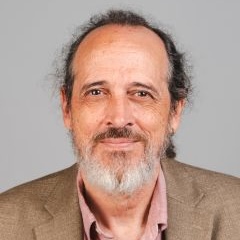
David Sheets
Dr. Sheets was trained as a physicist but has worked for many years as an applied data scientist, overseeing collaborative, interdisciplinary teams to address a variety of questions. He has published scientific works in biology, entomology, forensics, paleobiology, physics, anthropology and art conservation. He co-authored a leading textbook in geometric morphometrics, a set of methods for carrying out hypothesis testing based on the shapes of non-human organisms. His current work focuses on measuring the performance characteristics of forensic firearms and handwriting examiners, as well as applying data science to the analysis of surface textures on art objects.

Randhir (Randy) Agarwal
Randhir (Randy) Agarwal currently leads the data engineering and data science teams at Samsung Electronics. He has over 25 years in the wireless telecommunications industry, including deploying Green-field wireless networks worldwide and fine-tuning them for optimal performance. Mr. Agarwal holds an M.S. in Data Science from Northwestern with a specialization in analytics and modeling, and a Bachelor of Engineering in Telecommunications from the University of Mumbai.
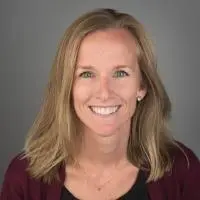
Torrey Walker DiPalma, M.Ed.
Torrey is our success coach for the Data Science & Analytics program and is very important to the overall student experience. Throughout your time working towards your degree, Torrey will help address many of the questions you may have outside the classroom. In doing so, Torrey will help free more of your time to concentrate on mastering the content that is so important to your program progression.
Torrey earned her B.A. in Mathematics from the College of the Holy Cross and an M.Ed. in Higher Education from Merrimack College. You will get to engage with Torrey from the time you are admitted until you graduate, allowing you to have a consistent point of contact as you work to achieve your goals.

Michael Dupin, Ph.D.
Michael Dupin, Ph.D., is the Head (and founder) of Data Science at C Space, a market research company where he leads the efforts on artificial intelligence. With more than twenty years of experience in data and statistical analytics, he is a self-confessed geek, data scientist, statistician, researcher, modeler, author, and sailor.
Prior to C Space, Mike held various roles within banking, where he led efforts such as macroeconomic stress testing, risk management, financial modeling, and statistical model validation. Before the corporate world, he was a research fellow at Harvard University modeling blood flow in tumors. He holds degrees in nuclear physics, instrumentation, and a Ph.D. in Computational Fluid Dynamics.

Katherine Geist, Ph.D.
Katherine Geist holds a Ph.D. in Biology with an emphasis in computational evolutionary genomics. Her research ranges from gene expression in social insects to migraine symptom tracking in multiple sclerosis patients, with big data at the core of her research.

Yamil Guevara, Ph.D.
Dr. Yamil Guevara is an expert in the fields of artificial intelligence, machine learning, and data science. He holds an MBA and two master’s degrees in artificial intelligence and machine learning as well as economics. He received his first Ph.D. in Organization and Management and is working on his second Ph.D. in Computer Science with an emphasis on artificial intelligence.
In addition to teaching, he has eight years of experience working as a data scientist, developing machine learning models using classical machine learning and deep learning neural network (DNN) algorithms to solve business problems. Dr. Yamil Guevara has authored “How to Increase Online Student Retention Utilizing Machine Learning” (University of Arizona Global Campus Chronicle, 2021), “Dangers of Artificial Intelligence” (Medium, 2022), “The Impact of Artificial Intelligence on Society” (Medium, 2022), and “The Utilization of Artificial Intelligence in the Classroom” (University of Arizona Global Campus Chronicle, 2021).

Christopher Healey, Ph.D.
Chris is a Data Science Lead at Schneider Electric — a multinational power electronics, energy storage, and building management company. He leads work in industrial applications of data science for predictive maintenance, intelligent alarm management, and efficient use of devices. He is deeply interested in robust decision-making through stochastic optimization and interpretation of machine learning models. A long-time member of INFORMS, he has authored several refereed papers and been granted multiple patents.
Chris received a Ph.D. in Industrial Engineering from Georgia Tech and a B.S. in Mathematics from William and Mary. Chris teaches Data Exploration for the Data Science & Analytics program. Chris teaches Visual Data Exploration for the Data Science program.

Jeremiah Lowhorn, M.S.
Jeremiah is a data scientist with nine years of experience in analytics. He is currently an adjunct faculty member in the Data Science & Analytics program. His interests include computer vision, natural language processing, time series analysis, and distributed computing. Jeremiah is fluent in R, Python, VBA, and SQL, and is interested in learning new programming languages.
In his leisure, he spends time with his wife Brooke and son Magnus. Jeremiah holds a B.S. in Financial Analysis from Ball State University, an M.S. in Analytics from Dakota State University, and is pursuing an M.S. in Information Systems and Ph.D. from Dakota State University. Jeremiah teaches R and Python programming in the data science program.

Josh Orenstein
Josh Orenstein is currently the NBA’s senior director of Basketball Strategy & Analytics and senior data scientist. He has over a decade of experience in the sports industry as a data scientist. He analyzed 3D radar data that transformed performance evaluation and development in Major League Baseball. At the NBA, he uses advanced analytics to improve the competitiveness of the on-court product, evaluation of referees, and evaluation of collegiate basketball players. He teachesAdvanced Sports Analytics at Merrimack College and is a Columbia University lecturer.
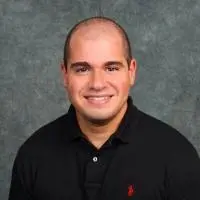
Peter Salemi, Ph.D.
Dr. Peter Salemi has over 10 years of experience in quantitative research, machine learning, and statistics in both academic and industry settings. As a data scientist at The MITRE Corporation, he works with several federal agencies ranging from the United States Department of Veterans Affairs to the Centers for Medicare & Medicaid Services. Dr. Salemi received his Ph.D. in Operations Research from Northwestern University, an M.S. in Operations Research from the University of California, Berkeley, and a B.S. in Mathematics and B.B.A. in Finance from the University of Massachusetts, Amherst.
His academic research interests lie at the intersection of machine learning and stochastic simulation, and Dr. Salemi’s research has been published in Operations Research, ACM Transactions on Modeling and Computer Simulation, and the Journal of Simulation. Dr. Salemi has also served as the co-chair of the Simulation Optimization track for the 2017, 2019, and 2020 Winter Simulation Conferences, and as a reviewer for several academic journals. His teaching interests are machine learning, data management, and statistics. As an adjunct faculty member at Merrimack College, Dr. Salemi is the instructor for both the Machine Learning and Text and Image Mining courses.
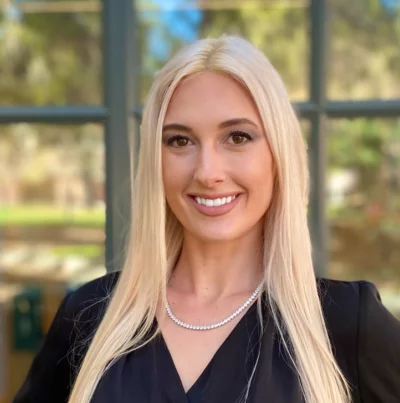
Kathryn Wifvat, Ph.D.
Kathryn Wifvat, originally from Minnesota, earned her B.S. in Mathematical Statistics and a B.A. in Applied Mathematics before completing a Ph.D. in Applied Mathematics at Arizona State University. With experience in data analytics and full-stack web and mobile app development, she is now the founder and CEO of an edtech startup, in addition to being an adjunct faculty member.
Student Support Resources
Students in the School of Engineering and Computational Sciences benefit from a dedicated success team.
Support includes:
- Access to coding LinkedIn Learning courses
- Personal student success coaching
- 1:1 tutoring
- 1:1 mentoring from faculty and program staff
Tuition and Financial Aid
$725
per credit*
32
credits
$23,200
tuition
*Tuition based on 2025-2026 academic year.
Tuition and fees are subject to change annually.
Additional program fees may apply.
Financial Aid
Merrimack College remains committed to providing one of the most affordable online M.S. in Data Science programs, ensuring students can access a high-quality, regionally accredited, private business school education at a competitive price.
As a graduate student, you may qualify for federal loans. We strongly encourage all eligible* graduate students to apply for federal financial aid, even if they don’t demonstrate an exceptional financial need. Graduate students also have the option of obtaining private loans and/or enrolling in an institutional payment plan.
Complete the Free Application for Federal Student Aid (FAFSA).
Merrimack College’s FAFSA school code is 002120.
*Certificate programs do not qualify for federal financial aid.
Tuition Assistance, Scholarships and Discounts
- Employer tuition assistance: Many employers offer tuition reimbursement — check with your HR department.
- Alumni discount: Double Warrior Scholarships are available to all Merrimack graduates. New alumni automatically receive a 33 percent savings on tuition if they begin a graduate degree program within two terms following graduation. All other alumni (i.e., those with an earlier graduation date) are eligible for a tuition discount of 25 percent.
- Partnership discount: Employees of affiliated companies may qualify for discounted tuition rates. Partners include Blue Cross Blue Shield, Citizens Bank, Mass General Brigham, New Balance and many more. Contact us or ask your employer whether your organization is an official partner with Merrimack’s online programs.
It’s Easy to Apply Online
A complete application includes:
- Online application (no fee)
- Official college transcripts from all institutions attended
- Resume or LinkedIn profile
GRE and GMAT scores are not required. Additional materials may be requested.
Key Dates and Deadlines
This program enrolls six times a year. Each term is eight weeks.
You May Also Be Interested In:
M.S. Business Analytics
EXPLORE PROGRAMApplied AI Certificate
EXPLORE PROGRAMData Science Foundations Certificate
EXPLORE PROGRAMQuantum Computing Certificate
EXPLORE PROGRAMMerrimack College
Accolades and Accreditation
At Merrimack College, we’re proud of our long history of providing quality degrees to students entering the job market. Our faculty are more than just teachers. We are committed to helping you grow — academically, personally and spiritually — so that you may graduate as a confident, well-prepared citizen of the world.
U.S. News & World Report | Best Regional Universities North (2026)
- Most Innovative Schools (No. 8)
- Regional Universities North (No. 38)
- Best Undergraduate Teaching (No. 20)
- Best Undergraduate Engineering Programs (No. 82)
(at schools where doctorate not offered) - Best Colleges for Veterans (No. 16)
- Best Value Schools (No. 52)
NECHE-Accredited
- Merrimack College is accredited by the New England Commission of Higher Education (NECHE).
Tell me more about Merrimack’s programs.
*This applies to new students entering the Summer I 2026 term. Does not roll over to subsequent terms. Does not include MBA, MED, CAGS, Post-MSN Certificate, CPA and CMA Exam Preparation Certificate. Not combinable with other offers (i.e. Double Warrior, Fellowship, Partnership Discounts, etc.) For CSC 6000, credit will be applied to their second course.