Complete your application by Dec. 18 for Spring I and secure a $1,000* Dean’s Scholarship.
Master of Social Work (M.S.W.)
Graduate ready to meet initial social work licensure requirements. Fellowships and scholarships available.
View all Counseling and Social Work Programs
Your Mission, Your Schedule, Your Master of Social Work.
Merrimack’s CSWE-accredited graduate degree in social work is designed to prepare you to be an agent of positive change and transform the society in which you live.
Quick facts:

Accreditation: Council on Social Work Education (CSWE), New England Commission of Higher Education (NECHE)

100 percent online or hybrid coursework

Preparation for licensure and national exam

60 credits (38 with advanced standing)

Choose full- or part-time study

Presidential Fellowships available

Financial aid eligible

No GRE or GMAT required
Learn more about Merrimack’s Master of Social Work (M.S.W.)
Access a program brochure, connect with enrollment and get a head start on your application.
Find Your M.S.W. Pathway
Whether you’re new to the field or already hold a Bachelor of Social Work, Merrimack offers two program pathways designed to meet you where you are and help you achieve your professional goals.
| Master of Social Work | Master of Social Work, Advanced Standing | |
|---|---|---|
| Eligibility | Bachelor’s degree (no specific major required) | Bachelor of Social Work from a CSWE-accredited program completed within the last five years |
| Designed for | Career changers, recent graduates and working professionals who are new to social work and want to build a strong foundation for licensure and practice | Students with a B.S.W. who are ready to accelerate their graduate education and move quickly toward advanced practice and licensure |
| Credits | 60 | 38 |
| Completion time | Full time: Two years Part time: Three to four years | Full time: Three semesters Part time: Four+ semesters |
| Field experience | 900+ hours over two academic years | 500–600 hours over one academic year |
| Start terms | Fall (part or full time), Spring (part time only) | Summer (part or full time) |
Eligibility:
Bachelor’s degree (no specific major required)
Designed For:
Career changers, recent graduates and working professionals who are new to social work and want to build a strong foundation for licensure and practice
Credits:
60
Completion Time:
Full time: Two years
Part time: Three to four years
Field Experience:
900+ hours over two academic years
Start Terms:
Fall (part or full time), Spring (part time only)
Eligibility:
Bachelor of Social Work from a CSWE-accredited program completed within the last five years
Designed For:
Students with a B.S.W. who are ready to accelerate their graduate education and move quickly toward advanced practice and licensure
Credits:
38
Completion Time:
Full time: Three semesters
Part time: Four+ semesters
Field Experience:
500–600 hours over one academic year
Start Terms:
Summer (part or full time)
Why Choose the M.S.W. Program at Merrimack
In addition to being the only M.S.W. degree program in the Merrimack Valley, our program stands out for its:
Convenience & Flexibility
Choose the format that fits your life, with 100 percent online coursework or evening classes at our North Andover campus. Complete your degree part time or full time.
Courses are offered in a mix of synchronous and asynchronous formats, allowing students to balance their education with work and other commitments.
Fellowship Opportunities
Apply for a unique fellowship that covers up to 60 percent of your tuition in exchange for a nine-month, 25-hour-per-week field placement.
Real-World Experience and Licensure Preparation
Our program creates and provides students with transformative learning experiences in and out of the classroom that positively impact children, families and the greater society.
Practical, Relevant Skills
Merrimack’s M.S.W. program prepares you to support individuals, families and communities through an advanced generalist framework.
You’ll develop skills grounded in access, equity and social and economic justice, as well as ethical and reflective practice.
Overview of Merrimack’s Master of Social Work
Our M.S.W. degree program is an advanced generalist program with an emphasis on interdisciplinary collaboration.
You will integrate and apply social work knowledge, values, skills and cognitive and affective processes to practice in a culturally responsive, purposeful, intentional and professional manner to promote human and community well-being.
You will have the option to take electives that will lead you to gain knowledge within a specific practice area. Depending on your focus, you may be assigned a field educational experience within the corresponding practice area.
You can select from a variety of interests, including:
- Clinical practice with individuals, families, groups and organizations
- Substance use disorders and behavioral addictions practice
- Macro social work practice
- Community engagement
- School social work
- Spirituality
- Criminology and criminal justice
Master of Social Work Coursework
In Merrimack’s Master of Social Work program, students learn through a combination of classroom instruction and real-world field experience, preparing for advanced professional practice grounded in service, dignity, respect and a commitment to positive social change.
Students can tailor their degree through electives and diverse field placements, selecting areas of focus aligned with their interests and career goals, including:
- School social work
- Substance use disorder
- Criminology & criminal justice
- Spirituality & social work
- Community engagement (macro)
Field Experience
Master of Social Work students complete a minimum of 900 hours of supervised field education, while Master of Social Work, Advanced Standing students complete a specialist-year field placement only (approximately 500–600 hours). Field placements take place in a variety of settings, including schools, hospitals, community mental health clinics, substance abuse recovery centers, juvenile courts and correctional facilities, with weekly supervision provided by M.S.W. faculty and site supervisors.
Licensure Preparation
The Master of Social Work program prepares students to pursue licensure as a Licensed Clinical Social Worker (LCSW) in the U.S., including preparation for the Association of Social Work Boards (ASWB) Clinical Level Exam.
Foundation Courses
Complete the following eight required courses (28 credits):
This is an introduction to the history, philosophy and development of social welfare and the social work profession in the United States. The course traces the development of and the interrelationships between social welfare policy and social work practice. This course examines social welfare problems, the system of social welfare and its interrelationships with direct practice and the delivery of services. Particular emphasis is placed on the examination of different political and economic conceptions, as well as the ways they shape social programs and, in turn, social work practice. This course deals with the societal and social policy content that impacts professionals in their service roles. The general aim is to develop an analytic and critical approach to the study of how society politically and economically structures its caring responses. M.S.W. required course. Open to non-M.S.W. students with permission of the program director. Credits: 4
This course introduces students to how social workers conceptualize the social constructions of social identities and engage in culturally humble practice in a variety of settings. Students are introduced to an integrated practice framework that promotes human rights and justice and identifies the root causes of global social issues. They will explore theories that address human need, social, economic and environmental justice, intersectionality, diversity, and oppression and discrimination. Using a broad and inclusive definition of culture, students learn how to recognize the extent to which a culture’s structure and values, including social, economic, political and cultural exclusions, may oppress, marginalize, alienate or create privilege and power. Utilizing a strengths-based perspective, this course examines the resilience of populations-at-risk, particularly people of color, persons with disabilities and people who identify as LGBTQ. Students learn to engage in advocacy to advance human rights and social, economic and environmental justice. M.S.W. required course. Credits: 4
This course presents the broad range of research tools that social workers can use to improve the effectiveness and efficiency of their practice. This course will enable students to engage in the process of evidence-based social work practice. Students will develop basic competencies in the critical consumption of social work-relevant research and evaluation data. Students will learn to interpret qualitative and quantitative research, conduct a literature review and understand the nature of evidence-based practice in social work practice arenas. Additionally, students will develop a basic social work practice-relevant research proposal. The course also emphasizes how social work research can help professionals better understand and more effectively impact problems of injustice, inequity, oppression and discrimination in contemporary American society. M.S.W. required course. Credits: 4
Prerequisite(s): MSW 5000 or permission of the program director
This course represents the first of a two-course “foundation year” practice sequence. The course is structured around the phases of the helping process, which include engagement, assessment, contracting, intervention, evaluation and termination. Using the case study method, this course introduces students to the various practice theories and methodologies in social work practice. Students will learn to examine the basic concepts of many theories and how they apply to different client cases. Each theory will be examined in reference to potential use in working with individuals, families and groups. The course explores the application of practice behaviors and the integration of social work values and ethics into micro and mezzo practice. Students will participate in reviewing and assessing case studies. Students will also have an opportunity to apply theories to cases in their field education placement. M.S.W. required course. Credits: 4
Corequisite(s): MSW 6001 (concurrent requisite)
This course represents the second part of a two-course “foundational year” practice sequence. The course is structured around the phases of the helping process, which include engagement, assessment, contracting, intervention, evaluation and termination. Using the case study method, this course introduces students to the various practice theories and methodologies in social work practice. Students will learn to examine the basic concepts of many theories and how they apply to different client cases. Each theory will be examined in reference to potential use in working with groups, agencies and communities. The course explores the application of practice behaviors and the integration of social work values and ethics in organizations and communities using a macro practice lens. Students will participate in reviewing and assessing case studies. Students will also have an opportunity to apply theories to cases in their field education placement. M.S.W. required course. Prerequisites: MSW5004 with a grade of B or higher and MSW6001. Corequisite MSW 6002. Credits: 4
Prerequisite(s): MSW 5004 with a grade of B or higher, MSW 6001
Corequisite(s): MSW 6002
This course reviews theories, themes and issues that concern the interaction among individuals and their social contexts as they develop and change over the life course. Theoretical concepts and assumptions about human behavior and diversity are specifically applied to social work contexts. Values and ethical issues related to biopsychosocial development are also examined in the course. The purpose of this course is to prepare students to participate in generalist social work practice by increasing their understanding of individual human behavior in the context of the social environment (e.g., families, communities, societies and organizations). Behavior refers to how persons act as well as think. The connection between behavior and the social environment is bi-directional, which means that behavior affects the social environment at the same time that the social environment affects behavior. Students taking this course will learn how to assess and evaluate behaviors in typical and less typical contexts occurring for persons across age range, gender, cultural identity, socioeconomic status, etc. Throughout their study of human development theory across the lifespan and how it interplays with the social environment, students will be introduced to generalist social work competencies that they will learn to apply in their practice. These competencies include but are not limited to demonstrating ethical behavior, increasing understanding of diversity and engaging, assessing, intervening and evaluating individuals, families, communities and organizations. Required M.S.W. course. Open to non-M.S.W. students with permission of the program director. Credits: 4
Foundation year graduate students will integrate theoretical constructs and information gained in the classroom with the experiential learning gained in the field setting. In the field, students enhance their understanding of the generalist approach and develop their social work profession identity. Students are expected to be in an agency for a minimum of 16 clock hours a week. Credits: 4
Corequisite(s): MSW 5004
Foundation year graduate students focus on application and individual action required in their field setting. During this second semester of a generalist field placement, students increase their ability to apply critical thinking skills in their analysis of field work. Students are expected to accept more responsibility for their individual learning. Students are expected to be in an agency for a minimum of 16 clock hours a week. Credits: 4
Prerequisite(s): MSW 5004 and MSW 6001
Corequisite(s): MSW 5005
Required Specialist Courses
Complete the following six required specialist courses (20 credits):
Building on the knowledge, methods and skills from MSW 5002, students will continue to learn how to critically assess research from ethical, multicultural and social justice perspectives, particularly in the context of agency-based research and program evaluation. Students learn about the design and implementation of all phases of an evaluation, from needs assessment to analysis of findings. Skills such as survey construction and budgeting are introduced. Students will plan and conduct a research evaluation project. This includes 1) formulating a question, 2) designing and implementing a study and 3) interpreting and presenting the study findings. An expectation is for students to collaborate with their field placement instructors, employers or a community group with the aim of meeting a need of that agency. M.S.W. required course. Credits: 4
Prerequisite(s): MSW 5002 or advanced standing status
This course builds upon the content of MSW 5000 and introduces students to the development and analysis of contemporary social welfare policy in three dynamic parts. Initially, students delve into several concepts related to the development of social welfare policy and how the values of the profession apply to policy development. This includes a dynamic and rich exploration of the historical underpinnings of social policy, social injustice and systemic racism. In part two of the class, students are able to identify and apply a variety of theoretical frameworks for understanding and analyzing social policy. This includes investigating social welfare policy areas, including child welfare policy, criminal justice policy, social inequality, poverty, health care, housing and the foundations of the Americans with Disabilities Act/laws. Each topic area is also used to illustrate a component of the policy development and analysis process, including the analysis of ideologies and values as they shape policy formulation, the process by which legislation is proposed and enacted, the roles and advocacy of lobbying organizations and the challenges of policy implementation and evaluation. In part three of the class, students perform a deep analysis of the current cases being adjudicated by the United States Supreme Court. MSW required course. Credits: 4
Prerequisite(s): MSW 5000
The course is designed as an advanced generalist practice course with a focus on assessment and intervention. Students will study evidence-based applications of theory to practice with diverse populations at a more in-depth level than in their previous generalist practice training. Reflection on ethical concerns and professional “use of self” is also integrated into the course. Students will apply intervention theories and models to various areas of concern and to different client populations and developmental periods (i.e., individuals, couples, families, children, adolescents). Focus will be placed on intervention and assessment for areas that include depression, suicidal ideation, anxiety, grief, traumatic stress and crisis. A biopsychosocial and cultural emphasis will be applied to assessment and intervention. Multiple modalities and theoretical orientations will be discussed, including cognitive and behavioral and solution-focused techniques, Relational-Cultural Theory, self-compassion, narrative therapy, psychodynamic interventions, trauma-informed practice, plus others. The overall aim of the course is to provide students with exposure to and practice with applying different types of assessment and intervention methods in direct social work practice. Credits: 4
Prerequisite(s): MSW 5004 MSW 5005 MSW 6001 MSW 6002
Corequisite(s): MSW 6003
This capstone seminar is a one-semester course for graduating M.S.W. students. The seminar has two purposes: (1) to help students reflect upon and integrate their learning in the M.S.W. program, particularly in the specialization year curriculum, with the Council on Social Work Education (CSWE) competencies and (2) to help students apply their understanding of the competencies through a systematic literature review research project and related research project proposal. Required M.S.W. course. Credits: 4
Prerequisite(s): MSW 5004 MSW 5005 MSW 5007 MSW 6001 MSW 6002 MSW 6003
Corequisite(s): MSW 6004
In the advanced year field experience, students refine and expand their understanding of and ability to demonstrate the professional knowledge, value, ethics and skills mastered in the foundation year. As emerging professional social workers, students demonstrate their ability to engage in assessment and intervention across the micro, mezzo and macro social work continua and across the client life span. Students are expected to be in an agency for a minimum of 24 clock hours per week. Credits: 4
Prerequisite(s): MSW 5004, MSW 5005, MSW 6001, and MSW 6002
Corequisite(s): MSW 5007
In the advanced year field experience, students refine and expand their understanding of and ability to demonstrate the professional knowledge, value, ethics and skills mastered in the foundation year. As emerging professional social workers, students demonstrate their ability to engage in assessment and intervention across the micro, mezzo and macro social work continua and across the client life span. Students are expected to be in an agency for a minimum of 24 clock hours per week. Credits: 2
Prerequisite(s): MSW 5004 MSW 5005 MSW 5007 MSW 6001 MSW 6002 and MSW 6003
Corequisite(s): MSW 5010
Elective Courses
Students enrolled in either the regular graduate program (full time or part time) or the advanced standing program will also select 8 to 12 credits of electives in consultation with their academic advisor.
Working effectively with youth requires a solid understanding of human service and legal systems available to support families and children. In this course, you will have the opportunity to research community resources, examine the juvenile justice system and explore laws and policies that impact youth and their families. Credits: 4
This course provides a framework of knowledge, values, skills and experiences for spiritually-sensitive social work practice, in order to prepare students to respond competently and ethically to diverse spiritual and faith perspectives. A comparative and critically reflective approach to the content is utilized. Students will critically examine the roles of religion and spirituality in supporting or impeding human functioning and a socially just society. Students will develop self-awareness of religion and spiritual diversity. Credits: 4
Guided by the values and ethical principles of the social work profession, this course introduces students to the categories and criteria designed in the DSM-V and utilized by social workers when working with adults, children and youth. Specific attention is given to the ethical considerations of using the DSM-V when working with clients and the implications for the use of the manual. The course introduces clinical syndromes in terms of diagnostic methodology, research and social concerns and their implications for at-risk groups. Credits: 4
Prerequisite(s): MSW 5004 and MSW 5005, or permission of the program director
This course uses a social work systemic approach to understanding substance misuse and other addictive behaviors. The course is designed to provide an overview of the epidemiological perspective, ethical and legal perspective and sociological perspective. It also contains information on current treatment trends, including the recognized levels of care. The course ends with an overview of both the historic and contemporary policy trends for how our society views addiction, responds to those people affected by addiction, advances social and economic justice and how to eradicate pressing societal problems in complex and culturally diverse environments. Open to non-M.S.W. students. Credits: 4
Prerequisite(s): MSW 5004 and MSW 5005 , or permission of the program director
Advanced Standing Courses
Students who have earned a Bachelor of Social Work degree from a Council on Social Work Education (CSWE)-accredited institution are eligible to participate in a three- to four-semester, 38-credit program. Students complete advanced standing courses (24 credits), plus electives (12 credits).
Building on the knowledge, methods and skills from MSW 5002, students will continue to learn how to critically assess research from ethical, multicultural and social justice perspectives, particularly in the context of agency-based research and program evaluation. Students learn about the design and implementation of all phases of an evaluation, from needs assessment to analysis of findings. Skills such as survey construction and budgeting are introduced. Students will plan and conduct a research evaluation project. This includes 1) formulating a question, 2) designing and implementing a study and 3) interpreting and presenting the study findings. An expectation is for students to collaborate with their field placement instructors, employers or a community group with the aim of meeting a need of that agency. M.S.W. required course. Credits: 4
Prerequisite(s): MSW 5002 or advanced standing status
This course builds upon the content of MSW 5000 and introduces students to the development and analysis of contemporary social welfare policy in three dynamic parts. Initially, students delve into several concepts related to the development of social welfare policy and how the values of the profession apply to policy development. This includes a dynamic and rich exploration of the historical underpinnings of social policy, social injustice and systemic racism. In part two of the class, students are able to identify and apply a variety of theoretical frameworks for understanding and analyzing social policy. This includes investigating social welfare policy areas, including child welfare policy, criminal justice policy, social inequality, poverty, health care, housing and the foundations of the Americans with Disabilities Act/laws. Each topic area is also used to illustrate a component of the policy development and analysis process, including the analysis of ideologies and values as they shape policy formulation, the process by which legislation is proposed and enacted, the roles and advocacy of lobbying organizations and the challenges of policy implementation and evaluation. In part three of the class, students perform a deep analysis of the current cases being adjudicated by the United States Supreme Court. M.S.W. required course. Credits: 4
Prerequisite(s): MSW 5000
The course is designed as an advanced generalist practice course with a focus on assessment and intervention. Students will study evidence-based applications of theory to practice with diverse populations at a more in-depth level than in their previous generalist practice training. Reflection on ethical concerns and professional “use of self” is also integrated into the course. Students will apply intervention theories and models to various areas of concern and to different client populations and developmental periods (i.e., individuals, couples, families, children, adolescents). Focus will be placed on intervention and assessment for areas that include depression, suicidal ideation, anxiety, grief, traumatic stress and crisis. A biopsychosocial and cultural emphasis will be applied to assessment and intervention. Multiple modalities and theoretical orientations will be discussed, including cognitive and behavioral and solution-focused techniques, Relational-Cultural Theory, self-compassion, narrative therapy, psychodynamic interventions, trauma-informed practice, plus others. The overall aim of the course is to provide students with exposure to and practice with applying different types of assessment and intervention methods in direct social work practice. Required M.S.W. course. Credits: 4
Prerequisite(s): MSW 5004 MSW 5005 MSW 6001 MSW 6002
Corequisite(s): MSW 6003
This seminar is designed specifically for advanced standing students in order to review and synthesize concepts, theories and practice methods pertinent to a generalist social work perspective. The seminar incorporates conceptual understanding and practice principles for social work practice with individuals, families, small groups and communities. The seminar reviews content from the foundation-year courses, including diversity, values, ethics and research. The goal is to prepare students for the M.S.W. program’s Advanced Generalist Concentration curriculum. In doing so, it builds upon the social work knowledge, skills, values and cognitive and affective processes foundation developed in participants/B.S.W. programs. Students will review content learned at the baccalaureate level, along with other new material that will be helpful in preparing them for the rest of the M.S.W. program. Additionally, this course addresses topics necessary for advanced-level M.S.W. practice and to support effective and ethical micro, mezzo and macro-level interventions. Students will also be asked to reflect on social work core competencies and to integrate them into their perspectives on practice through the completion of a paper assignment. Required M.S.W. course for students in the advanced standing track. As per CSWE guidelines and requirements, this course is open only to and required of M.S.W. students admitted into the advanced standing program option. Credits: 4
This capstone seminar is a one-semester course for graduating M.S.W. students. The seminar has two purposes: (1) to help students to reflect upon and integrate their learning in the M.S.W. program, particularly in the specialization year curriculum, with the Council on Social Work Education (CSWE) competencies and (2) to help students apply their understanding of the competencies through a systematic literature review research project and related research project proposal. Required M.S.W. course. Credits: 4
Prerequisite(s): MSW 5004 MSW 5005 MSW 5007 MSW 6001 MSW 6002 MSW 6003
Corequisite(s): MSW 6004
In the advanced year field experience, students refine and expand their understanding of and ability to demonstrate the professional knowledge, value, ethics and skills mastered in the foundation year. As emerging professional social workers, students demonstrate their ability to engage in assessment and intervention across the micro, mezzo and macro social work continua and across the client life span. Students are expected to be in an agency for a minimum of 24 clock hours per week. Credits: 2
Prerequisite(s): MSW 5004, MSW 5005, MSW 6001, and MSW 6002
Corequisite(s): MSW 5007
In the advanced year field experience, students refine and expand their understanding of and ability to demonstrate the professional knowledge, value, ethics and skills mastered in the foundation year. As emerging professional social workers, students demonstrate their ability to engage in assessment and intervention across the micro, mezzo and macro social work continua and across the client life span. Students are expected to be in an agency for a minimum of 24 clock hours per week. Credits: 2
Prerequisite(s): MSW 5004 MSW 5005 MSW 5007 MSW 6001 MSW 6002 and MSW 6003
Corequisite(s): MSW 5010
Student Support Resources
Students in Merrimack’s Master of Social Work program benefit from a comprehensive network of academic, career and wellness resources designed to support success inside and outside the classroom. These include:
- Dedicated field experience placement coordination and fellowship opportunities
- Dedicated academic advising and student success coaching
- Writing assistance, library services, accessibility services and virtual tutoring
- Career counseling, resume reviews, interview preparation, networking opportunities and access to virtual career tools
- Mental health and wellness counseling services
- On-campus fitness center access and opportunities to participate in intramural and club sports
Many of these services are available remotely, ensuring online and hybrid learners receive the same high level of support as on-campus students.
M.S.W. Faculty
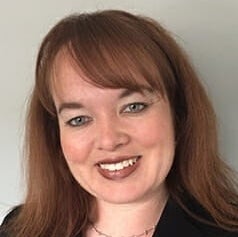
Sara Lafkas, Ed.D., LICSW, Interim Program Director
Dr. Sara Lafkas began her career working as an elementary school teacher in South Los Angeles. After receiving her M.S.W., she was a social worker in Child Protective Services in Northern California. Some of her additional professional experiences include working as a psychotherapist in private practice and at college counseling and community mental health service centers. Dr. Lafkas has also previously served as a social work faculty member and as an instructor for graduate-level counseling courses. Dr. Lafkas’ dissertation focused on adult development trajectories of religious women who had experienced parental divorce in childhood. She has also presented and written on many other topics, including self-compassion practice. Some of her recent research has focused on women’s perceptions of self-compassion, as well as impacts of COVID-19 on women and work. Dr. Lafkas earned her Ed.D. in Human Development and Psychology from Harvard University Graduate School of Education and her M.S.W. from the University of Washington.

Katherine Willard, M.S.W., LICSW
Katherine Willard is a Licensed Independent Clinical Social Worker with expansive knowledge in supporting children, adolescents and families. Most recently, Katie served as the assistant director of school counseling to a local urban school district, where she was tasked with overseeing all social-emotional learning initiatives for the district, providing supervision to all mental health clinicians, guidance counselors and social workers, and leading all mental wellness initiatives for the district. Most notably, she was able to connect the district with the Early College Program. Katie also has experience as a school adjustment counselor and an outpatient counselor, day treatment facilities and residential programs. She holds an M.S.W. with Specialization in Trauma and Interpersonal Violence from Simmons College and an Ed.S. from Bridgewater State University.
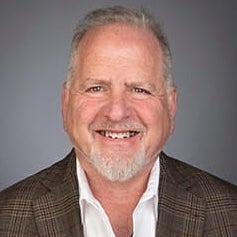
Jonathan Kessler, M.S.W., LICSW
Jonathan P. Kessler is a clinical social worker with over 30 years of experience. He has provided clinical services in a variety of settings, including criminal justice work, in- and outpatient treatment, addictions and trauma. He is the former clinical director of Camp Amesbury, a residential facility for incarcerated adolescent women, and has been the lead social worker for North Shore Educational Consortium’s Transitions Program, working with young adults on the autism spectrum. He has advanced clinical skill training in hypnosis, trauma, motivational interviewing, as well as individual, group and family therapy. He holds an M.S.W. from Simmons College School of Social Work.
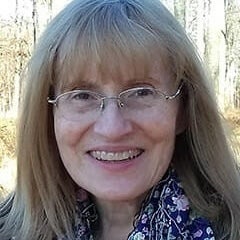
Virginia Durnford, Ed.D., M.S.W., M.A.
Dr. Virginia Durnford is an expert in trauma-informed care and the provision of therapeutic services for children and adults with special needs, particularly within trauma-sensitive school environments. Her research focuses on the treatment of trauma, including PTSD, and how it affects learning, with a special interest in developing strategies to support educational teams working with students struggling with Trauma- and Stressor-Related Disorders. Dr. Durnford holds an Ed.D. in Teacher Education and School Improvement from the University of Massachusetts, Amherst, an M.S.W. in Social Work from Boston University, and an M.A. in Special Education from the University of Connecticut. Her professional experience includes counseling in high-needs schools, providing therapeutic services in both school settings and private practice, and using resiliency training to help youth and young adults manage stress and anxiety.
Where Merrimack’s Master of Social Work Graduates Work
Beth Israel Lahey Behavioral Health Services
Clinical Social Worker
The Center For Hope and Healing, Inc.
Counselor and Program Advocate
NFI Massachusetts, Inc.
MST Clinician
Department of Mental Health
Transitional Age Youth Case Manager
What Our M.S.W. Students and Alumni Say
Tune Into the Grad Chat Podcast
Tune in to this episode of Grad Chat, where we are joined by Jordan Raffali, a graduate of Merrimack’s Master of Social Work. Jordan opens up about his experience in the program, highlighting the convenient flexibility that allowed him to balance his studies with other commitments, and the exceptional faculty who supported and challenged him along the way. Hear how the program shaped his academic path and prepared him for a meaningful career in social work!
Tune Into PodcastTuition and Financial Aid
Master of Social Work
$750
per credit**
60
credits
$45K
tuition
Master of Social Work – Advanced Standing
$750
per credit**
38
credits
$28.5K
tuition
**Tuition is based on the 2026–2027 academic year.
Tuition and fees are subject to change annually.
Additional program fees may apply.
Financial Aid
As a graduate student, you may qualify for federal support in the form of loans. We strongly encourage all eligible graduate students to apply for federal financial aid, even if they don’t demonstrate an exceptional financial need.
All graduate students also have the option of obtaining private loans and/or enrolling in an institutional payment plan.
Complete the Free Application for Federal Student Aid (FAFSA).
Merrimack College’s FAFSA school code is 002120.
Employer Tuition Assistance
Merrimack accepts employer financial/tuition assistance. We also offer partnership discounts. Contact us or ask your employer whether your organization is an official partner with Merrimack’s programs.
Alumni Scholarships
Double Warrior Alumni Scholarship: Available to all Merrimack graduates. New alumni automatically receive a 33 percent savings on tuition if they start a graduate degree program within two terms following graduation. All other alumni (i.e., those with an earlier graduation date) are eligible for a 25 percent tuition discount.
M.S.W. Graduate Fellowships
Graduate fellowships in Merrimack’s accredited M.S.W. program provide hands-on professional experience while significantly reducing tuition. Fellows benefit from real-world work experiences and professional networking opportunities.
The Presidential Fellowship is available to students in the Master of Social Work pathway and covers 100 percent of tuition for the first year of the program (up to 36 credits). This fellowship includes a nine-month, unpaid placement requiring a commitment of 25 hours of work per week.
The Presidential Fellowship is not available to students in the Master of Social Work, Advanced Standing pathway.
Note that, because of the field work integrated into the M.S.W. curriculum, fellowships are not available for the second year of the program.
It’s Easy To Apply Online
A complete application includes:
- Online application (no fee)
- Official college transcripts from all institutions attended
- Resume
- Personal statement
- Two letters of recommendation
Applicants to the Master of Social Work, Advanced Standing pathway must also hold a Bachelor of Social Work from a CSWE-accredited program completed within the last five years.
GRE and GMAT scores are not required. Additional materials may be requested.
In accordance with CSWE policy, the M.S.W. program at Merrimack College does not grant social work course credit for life experience or previous work experience.
Master of Social Work Key Dates
Start terms vary by pathway. The Master of Social Work offers Fall (full time and part time) and Spring (part time only) entry, while the Master of Social Work, Advanced Standing begins in the Summer only.
M.S.W. Full Time
M.S.W. Part Time
M.S.W. Advanced Standing
M.S.W. Fellowship
Merrimack College is accredited by the Council on Social Work Education’s Board of Accreditation (BOA).
Council on Social Work Education (CSWE) Accreditation
Accreditation of a baccalaureate or master’s social work program by the BOA indicates that it meets or exceeds standards of program quality evaluated through a peer review accreditation process. An accredited program has sufficient resources to meet its mission and goals, and the BOA has verified that it demonstrates compliance with all sections of the Educational Policy and Accreditation Standards (EPAS).
Accreditation applies to all program options, which include locations and delivery methods. Accreditation provides reasonable assurance about the quality of the program and the competence of students graduating from the program.
Review our program’s accredited status in CSWE’s Directory of Accredited Programs. For more information about social work accreditation, contact CSWE’s Department of Social Work Accreditation.
Summary of the Program’s Assessment Plan
As part of the ongoing accreditation process, the Council on Social Work Education (CSWE) requires all programs to report the assessment results of a series of competencies. Click here to view our latest assessment summary.
You May Also Be Interested In:
M.S. in Clinical Mental Health Counseling
EXPLORE PROGRAMM.Ed. in School Counseling
EXPLORE PROGRAMSchool Social Work/School Adjustment Counselor (SAC) Certificate for Post-Master’s Licensure
EXPLORE PROGRAMMerrimack College
Accolades and Accreditation
At Merrimack College, we’re proud of our long history of providing quality degrees to students entering the job market. Our faculty are more than just teachers. We are committed to helping you grow — academically, personally and spiritually — so that you may graduate as a confident, well-prepared citizen of the world.
U.S. News & World Report | Best Regional Universities North (2027)
- Most Innovative Schools (No. 2)
- Regional Universities North (No. 25)
- Best Undergraduate Teaching (No. 16)
- Best Undergraduate Engineering Programs (No. 71)
(at schools where doctorate not offered) - Best Colleges for Veterans (No. 8)
- Best Value Schools (No. 53)
- Top Private School (No. 17)
NECHE-Accredited
- Merrimack College is accredited by the New England Commission of Higher Education (NECHE).
ACBSP-Accredited
- The Girard School of Business at Merrimack College is conditionally accredited by the Accreditation Council for Business Schools and Programs (ACBSP).
Tell me more about Merrimack’s programs.
*Dean’s Scholarships are distributed over the life of the program. Eligible programs include: Master of Education degrees, M.S. Accounting, M.S. Business Analytics, M.S. Finance, M.S. Computer Science, M.S. Data Science, M.S. Information Technology, M.S. Quantum AI Applications, M.S. Nursing, M.S. Clinical Mental Health Counseling and Master of Social Work. Merrimack’s MBA is eligible for a $500 Dean’s Scholarship.